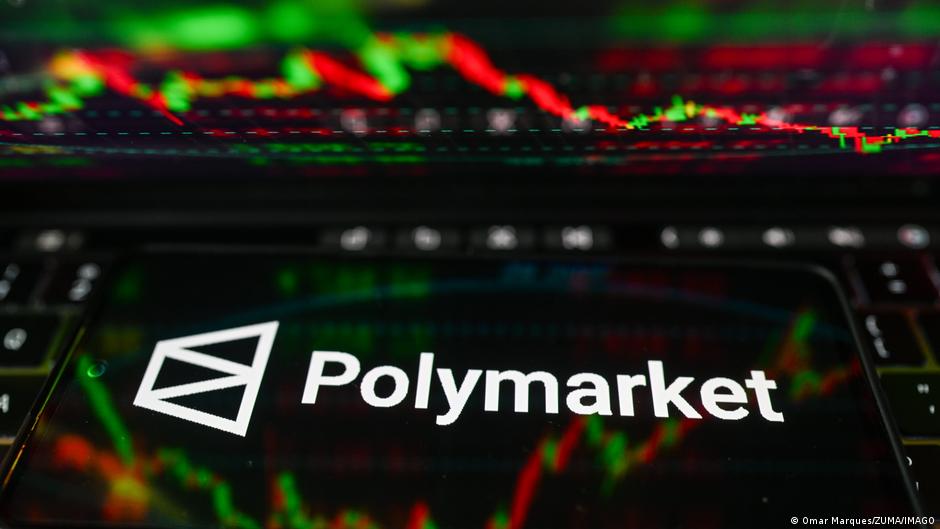
The multi-billion-dollar prediction market Polymarket is currently accepting bets on German regional elections later this year, even though using such sites is illegal in Germany. Prediction markets, which allow people to bet anonymously on anything from military strikes to the second coming of Jesus Christ, have gathered ever more attention in recent years and caused headaches for gambling regulators around the world. In the US, the Justice Department last year dropped its regulatory investigation into Polymarket, one of the world's market leaders along with Kalshi, a move that has led to their expansion in the US. But access to Polymarket has been blocked in several European countries, where governments regard them as unlicensed gambling platforms. Both the Polymarket and Kalshi websites remain accessible in Germany, even though the country's gambling authority has declared that using them is illegal. The central gambling authority of Germany's states, the GGL, released a statement last September warning Germans against using platforms like Polymarket. "Social betting refers to events in public or social life, such as political elections, court rulings, natural disasters, societal events, or other non-sporting developments," the authority said. "Such formats are particularly susceptible to manipulation, as they are often based on unclear, subjective, or easily influenced events." In a statement to DW, GGL said that while the websites for Polymarket and similar platforms were accessible, sending money to them from a German IP address was not possible, and that the GGL passes on any information about illegal betting to law enforcement authorities. Nevertheless, Polymarket currently has active betting markets on its site for the next three German state elections, in Saxony-Anhalt, Berlin and Mecklenburg Western-Pomerania, all of which take place in September, as well as on whether Friedrich Merz will leave office as chancellor before 2027. The Berlin election appears to be the most popular of these bets, with some $3 million (€2.6 million) having been bet on the result already, even though the vote is still several months away.Twin threats: Insider trading, market manipulation Experts have warned that prediction markets pose a risk to democratic processers. Burkhard Stiller, professor of computer science and specialist in financial technologies at the University of Zurich, said that was principally because "they attempt to convert political decisions into game theory models," he told DW. "It's unacceptable that such a technology can in principle manipulate narratives." The potential for insider trading in prediction markets has been well-illustrated by recent high-profile examples: Aggressive betting on the fall of Venezuelan President Nicolás Maduro and the US-Israeli attacks on Iran led to suspicions that opportunistic insiders had taken advantage of their knowledge. But since users can bet anonymously and the platforms deal in cryptocurrencies it is all but impossible to determine who is placing the bets. It was also reported this week that newly-created accounts on Polymarket had made hundreds of thousands of dollars by betting on a ceasefire between the US and Iran hours before the deal was announced. Such bets represent a danger to democratic processes, according to Stiller. Democracy, he said, was founded on parliaments and Cabinets finding a consensus to make decisions. Allowing bets on those decisions creates incentives that have nothing to do with their substance and so can distort the debate, he argued. Coupled with that is the danger of market manipulation, as people with enough money could tip prediction markets by betting heavily on a certain decision or a certain election result, artificially making it seem more likely and causing more users to bet on that outcome or a certain party. This would be the well-observed "bandwagon effect," said Alexander Bechtel, specialist in digital economics and lecturer at the University of St. Gallen.Anonymous prediction market users bet on the fall of Venezuelan President Maduro hours before he was capturedImage: Jane Rosenberg/REUTERS Danger to elections Prediction markets gained some notoriety in 2024 when they apparently predicted Donald Trump's victory over Kamala Harris in the US presidential election more accurately than opinion polls, and US news networks have already begun using prediction markets as a data source: In December, CNN announced that it was partnering with Kalshi to serve as a complement to the network's reporting on elections. As Bechtel pointed out, some political scientists have now started to give prediction markets more credence than traditional polling, because polls are often thought to be distorted by the fact that people sometimes don't like to admit they like a particular party. "We saw that in the US with elections around Donald Trump, when Donald Trump always got worse ratings than his opponents," he told DW. This, Bechtel suggested, was because people tend to be more honest when they "put their money where their mouth is." Is a prediction market better than an opinion poll? But just because you think someone is going to win an election, doesn't mean you approve of their politics, and experts have also warned against confusing prediction markets with opinion polls. "Of course, prediction markets can be distorted too," Bechtel admitted. Users can determine their own questions on prediction markets, which means they are often random and can be very niche, whereas polling institutes formulate questions that attempt to create an accurate picture of what voters of specific demographics in a specific country think. Bechtel is not too alarmed about the growing popularity of prediction markets. "My opinion is that prediction markets don't represent a structural risk for democracy, but they do harbor dangers," he said. Nevertheless, he does believe they require more regulation, and that some measures could be put in place to contain some of the dangers: Forcing prediction market users to identify themselves online, for example, would be a step towards curbing insider trading and market manipulation. Another option, he said, would be to stop prediction markets from allowing obscure, niche bets on specific political decisions, which would obviously provide incentives for manipulation. "These are all things that you should prevent, but I think you can prevent them through regulation," he said. Edited by Rina Goldenberg
BreakingWars & Conflicts
Germany: Betting on elections is illegal — but possible
Deutsche Welle April 12, 2026 at 12:36 PM
Original source
Deutsche Welle