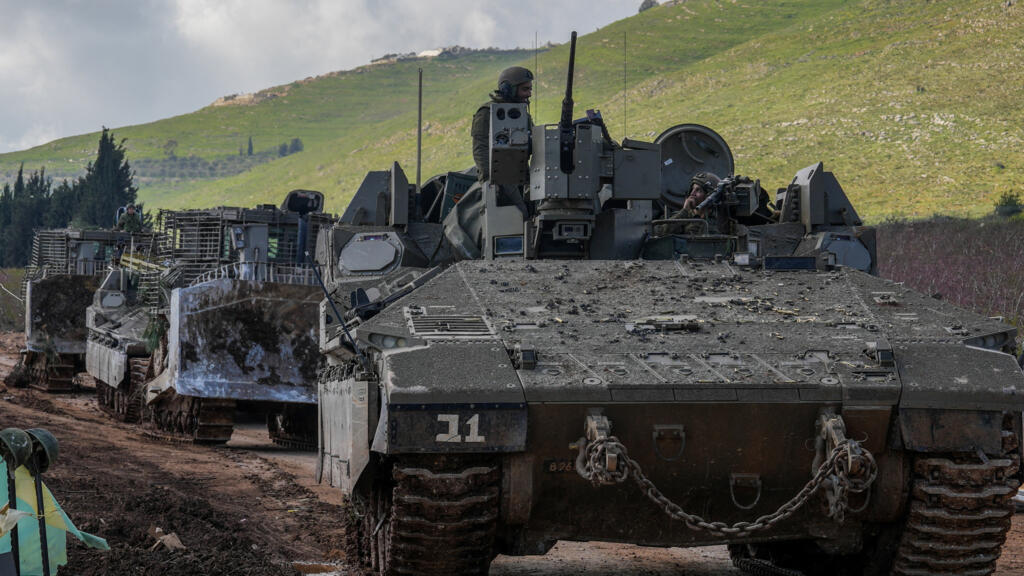
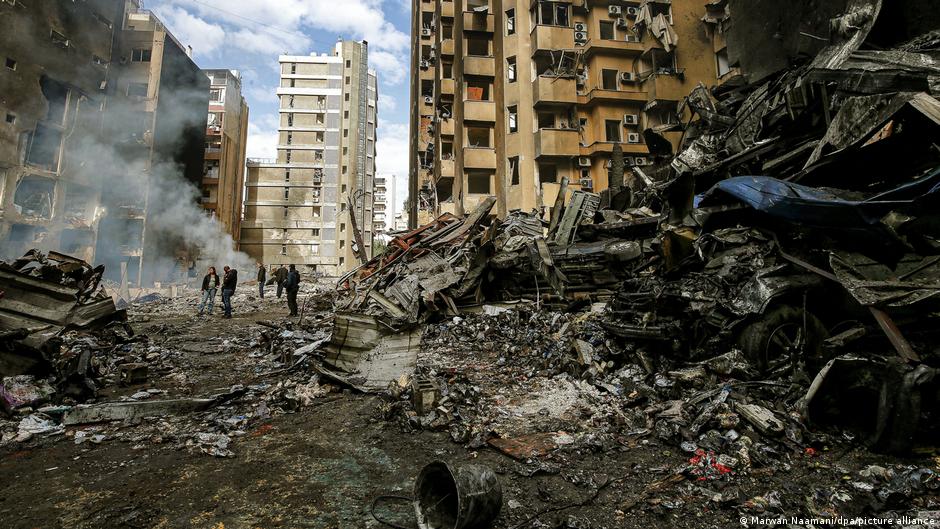
Skip next section Israel to begin talks with Lebanon 'as soon as possible' — NetanyahuApril 9, 2026Israel to begin talks with Lebanon 'as soon as possible' — NetanyahuNetanyahu has insisted that its war against Hezbollah in Lebanon is not covered by the ceasefire agreement with IranImage: Ronen Zvulun/AFP/Getty ImagesIsraeli Prime Minister Benjamin Netanyahu said he had ordered his Cabinet to swiftly begin direct talks with Lebanon. "In light of Lebanon's repeated requests to open direct negotiations with Israel, I instructed the cabinet yesterday to begin direct negotiations with Lebanon as soon as possible," Netanyahu's office said in a statement. "Negotiations will focus on disarming Hezbollah and establishing peace relations between Israel and Lebanon," the statement read. "Israel appreciates today's call by the Prime Minister of Lebanon to demilitarize Beirut." Multiple countries — including several US allies — have expressed concern that Israel's bombardment of Lebanon could jeopardize a ceasefire agreement between the United States and Iran, with Tehran saying Israel's continued offensive constitutes a violation of the truce. https://p.dw.com/p/5BwHXSkip next section What has happened since the US-Iran truce was announced?April 9, 2026What has happened since the US-Iran truce was announced?The United States and Iran reached a two-week ceasefire agreement early on Wednesday through Pakistani mediation. Here are some of the major developments since then. World leaders warily welcomed the truce between Washington and Tehran US declared 'victory' in war, while Iran called it a 'humiliating retreat' on the part of Washington Trump said Iran and the US could work together to secure the Strait of Hormuz Some ships passed through the strait, but others reported being sent back In-person talks between Iran and the US are set to begin in Pakistan on Saturday The White House said Vice President Vance would lead the US delegation Israel has continued its bombing campaign in southern Lebanon and Beirut Iran threatened to end the truce after accusing Israel of violating the ceasefire agreement by continuing its Lebanon offensive Iranian parliamentary speaker Ghalibaf said Israel had violated three parts of the agreement already on Wednesday US maintained that the truce did not cover Lebanon, with US Vice President JD Vance saying Iran's position was based on a 'misunderstanding' Pakistan, France, Russia and other countries have called for Lebanon to be included in the ceasefire deal Germany has said it will restart talks with Iran while Spain is set to reopen its Tehran embassy https://p.dw.com/p/5BwC2Skip next section Merz: Germany to reengage with Iran after 'excessive' Trump threat avertedApril 9, 2026Merz: Germany to reengage with Iran after 'excessive' Trump threat avertedGerman Chancellor Friedrich Merz delivered a surprise on Thursday afternoon with the announcement that Berlin would be reengaging with Iran in an effort to end the war in the Middle East for good. "After a long period of silence, for which there were serious reasons on our side, we as the Federal Government are now resuming talks with Tehran," he told reporters. According to Germany's Federal Press Office, Merz had been in contact "with all relevant parties" over the Easter weekend, including US President Donald Trump. Until now, however, the Chancellor had not spoken publicly about the situation not a single word, for instance, on President Trump's threat to wipe out a "whole civilization" before announcing a ceasefire. Merz's silence had puzzled many observers in Berlin but, after welcoming the ceasefire, he said: "The threat of an excessive escalation, which had been looming in recent days, has thus been averted, at least for the time being." A German Chancellor calling the behavior of a US president "excessive" yet another step in the increasing estrangement between Berlin and Washington.Where does Germany stand on the Iran war?To view this video please enable JavaScript, and consider upgrading to a web browser that supports HTML5 video https://p.dw.com/p/5BvzvSkip next section Some Lebanon hospitals dangerously low on supplies, WHO official warnsApril 9, 2026Some Lebanon hospitals dangerously low on supplies, WHO official warnsLebanon held a day of mourning on Thursady to commemorate all those killed in Wednesday's attacksImage: Bilal Hussein/AP Photo/picture allianceA World Health Organization (WHO) representative in Lebanon has warned of shortages of life-saving trauma medical kits in an interview with Reuters. The kits, which include bandages, antibiotics and anaesthetics, are used to treat patients who sustained war-related injuries. "Some of the trauma management supplies were in short [supply] and we may run out in a few days," the WHO's representative in Lebanon Abdinasir Abubakar told Reuters. Speaking a day after Israel's largest bombardment of the conflict to date killed more than 200 people and wounded more than 1,000, Abubakar said such widespread attacks put considerable strain on supplies. "If we have another mass casualty, like what happened yesterday, it will be a disaster," he said. "Probably we will lose more lives just because we don't have enough supplies." He said that Wednesday's attacks led to supplies that would usually last around three weeks being depleted in a single day. https://p.dw.com/p/5BvwWSkip next section Russia says it believes US-Iran truce applies to LebanonApril 9, 2026Russia says it believes US-Iran truce applies to LebanonRussia is pushing for a ceasefire in the Middle East while conducting its own war in UkraineImage: Pavel Bednayakov/picture alliance/APRussian Foreign Minister Sergei Lavrov said that Moscow supported peace negotiations between Washington and Tehran in a call with his Iranian counterpart, Abbas Araghchi. "Lavrov expressed hope for the success of the negotiations," the ministry said in a statement. It said that Russia welcomed the announcement of a two-week truce between the United States and Iran, while emphasizing that "Moscow firmly believes that these agreements … have a regional dimension and, in particular, apply to Lebanon." In a separate statement, ministry spokesperson Maria Zakharova condemned Israel's offensive in Lebanon, saying that the operations "threaten to derail the emerging negotiation process." https://p.dw.com/p/5BvzFSkip next section IMF warns millions at risk of food insecurity as result of the warApril 9, 2026IMF warns millions at risk of food insecurity as result of the warThe managing director of the International Monetary Fund (IMF) has warned of major disruptions among countries affected by the war in the Middle East, including lasting economic effects, even if the shaky partial ceasefire holds. Kristalina Georgieva said that food insecurity as a result of transport and supply chain disruptions caused by the war could affect at least 45 million people. "Even in a best case, there will be no neat and clean return to the status quo ante," she said as she opened the annual Spring Meetings co-hosted by the IMF and the World Bank. "Sharp increases in oil, gas, and fertilizer prices, together with transport bottlenecks, will inevitably lead to rising food prices and food insecurity," said a joint statement on the meeting. How the Iran war is hitting food pricesTo play this audio please enable JavaScript, and consider upgrading to a web browser that supports HTML5 audio Georgieva also said that the IMF anticipated more requests for financial assistance in the near future. "Given the spillovers of the Middle East war, we expect near-term demand for IMF balance-of-payments support to rise to somewhere between $20 billion (roughly €17 billion) and $50 billion, with the lower bound prevailing if the ceasefire holds," Georgieva said. She said the IMF would pare its 2026 global growth forecast in response to the conflict and the rising energy costs it prompted, even in the IMF's "most hopeful scenario." Georgiva also highlighted the "asymmetric" impacts of the crisis that will hit low-income and low-volume energy importers the hardest. "Spare a thought for the Pacific Island nations at the long end of the supply chain, wondering if fuel will still reach them in the wake of such a severe disruption," she said. https://p.dw.com/p/5Bvw9Skip next section Germany's Merz says Berlin 'restarting talks with Tehran'April 9, 2026Germany's Merz says Berlin 'restarting talks with Tehran'Merz said Berlin didn't want a 'split' in NATO after Trump criticized Washington's alliesImage: Nadja Wohlleben/REUTERSGerman Chancellor Friedrich Merz said Berlin was "restarting talks with Tehran" in coordination with the United States and European allies. The German leader said he had urged US President Trump to also engage in talks with Iran as soon as possible, while warning against a "split" of the NATO military alliance amid tensions between Washington and its allies. "We do not want — I do not want — NATO to split. NATO is a guarantor of our security, including and above all in Europe," Merz told journalists. Merz also voiced concern that Israel's offensive in Lebanon could jeopardize peace talks. "We view the situation in southern Lebanon with particular concern," he said. "The severity with which Israel is waging war there could cause the peace process as a whole to fail, and that must not be allowed to happen." His comments come a day after Trump said that allies in the US-led alliance were "tested and they failed," pointing to what he viewed as insufficient support for the US' war with Iran. https://p.dw.com/p/5BvuqSkip next section Lebanon seeks Pakistani support in verifying it is part of ceasefireApril 9, 2026Lebanon seeks Pakistani support in verifying it is part of ceasefirePakistan's Prime Minister Sharif was integral in arranging the ceasefire deal that was announced late on TuesdayImage: Hasnoor Hussain/REUTERSThe office of Pakistani Prime Minister Shehbaz Sharif said that his Lebanese counterpart, Nawaf Salam, asked for Islamabad's support in halting attacks in Lebanon. "Pakistan was engaged in sincere efforts for regional peace and it was in this spirit that the peace talks between Iran and the US were being convened," Sharif told Salam during a phone call, according to a statement from Pakistan's Prime Minister's Office. Salam's office said that he also asked Sharif to confirm that Lebanon was included in the Iran war ceasefire, coming after Israel carried out massive strikes on Wednesday. The US and Israel maintain that Israeli military operations targeting Hezbollah militants in Lebanon were not part of the agreement. Earlier Thursday, Iranian Parliament speaker Mohammad Bagher Qalibaf said Tehran considers Lebanon as part of the ceasefire agreement with the US and Israel and warned violations would carry "explicit and strong" responses. In a statement, Salam's office said he phoned Shehbaz Sharif. The Lebanese prime minister said he praised Islamabad's efforts in securing the ceasefire and asked him to "confirm that the ceasefire includes Lebanon to prevent a recurrence of the Israeli attacks witnessed yesterday." https://p.dw.com/p/5BvooSkip next section WATCH: Is the Iran truce already unraveling?April 9, 2026WATCH: Is the Iran truce already unraveling?Confusion reigns over the status of the ceasefire between the US and Iran. While the Iranians and mediator Pakistan have been clear — Lebanon is part of the agreement — the US and Israel disagree. Is the Iran truce already unraveling?To view this video please enable JavaScript, and consider upgrading to a web browser that supports HTML5 video https://p.dw.com/p/5BvmZSkip next section Israel issues evacuation warning for Beirut suburbsApril 9, 2026Israel issues evacuation warning for Beirut suburbsIsrael heavily bombed the southern suburbs of Beirut on Wednesday Image: Mohamed Azakir/REUTERSThe Israeli military on Thursday issued an evacuation warning for the southern suburbs of Beirut, an area known as a stronghold for Hezbollah militants. Israel's military normally issues such warnings ahead of carrying out military strikes on a specific area. The evacuation warning comes a day after Israel carried out its most widespread strikes on Lebanon since hostilities with Hezbollah reignited in early March after the Iran war was launched. Meanwhile, in southern Lebanon, Hezbollah said it was clashing with Israeli forces in Bint Jbeil, a town located 5 kilometers (3 miles) from the Israeli border. The town holds symbolic value as the location of a fierce battle in the 2006 war between Hezbollah and Israel. The Israeli military did not immediately comment on Thursday on fighting in the town. On Tuesday, the Israeli military said it had completed the deployment of troops along a "defense line" in southern Lebanon to "strengthen the forward defensive posture and remove threats to the residents and communities of northern Israel." A Lebanese military source speaking with AFP news agency on Tuesday said the Israeli army had advanced between 5 and 9 kilometres inside Lebanese territory. https://p.dw.com/p/5BveWSkip next section Iran warns Israeli strikes on Lebanon would render talks with US 'meaningless'April 9, 2026Iran warns Israeli strikes on Lebanon would render talks with US 'meaningless'Israel carried out widespread strikes on Lebanon Wednesday Image: Ali Hashisho/Xinhua/picture allianceIran's President Masoud Pezeshkian said Thursday that Israel's continued strikes on Lebanon violate an already shaky ceasefire agreement and would render negotiations "meaningless," as talks with US officials in Pakistan are planned for Friday. "This is a dangerous sign of deception and a failure to honor potential agreements," Pezeshkian posted on X. "We will keep our finger on the trigger. Iran will never abandon its Lebanese sisters and brothers." Israel and the US both say that a pause in strikes against Hezbollah in Lebanon were not part of the ceasefire agreement unveiled Tuesday night. At least 200 people were killed on Wednesday as Israel carried out its most extensive bombing of Lebanon since returned toconflict with Hezbollah again last month. Iranian parliament speaker Mohammad Bagher Qalibaf also said the strikes violate the ceasefire and warned in a social media post of an "explicit and strong" response. The Iranian comments come after Israeli Prime Minister Benjamin Netanyahu said on social media that Israel was continuing to "strike Hezbollah with force, precision, and determination." "Our message is clear: anyone who acts against Israeli civilians, we will strike them. We will continue to hit Hezbollah wherever necessary."Israel's Netanyahu: 'Our finger is on the trigger'To view this video please enable JavaScript, and consider upgrading to a web browser that supports HTML5 video https://p.dw.com/p/5BvHESkip next section Iranian nuclear chief rules out uranium enrichment restrictionsApril 9, 2026Iranian nuclear chief rule
BreakingWars & Conflicts
Iran war: Israel says it will hold talks with Lebanon 'soon'
Deutsche Welle April 9, 2026 at 04:37 PM
Original source
Deutsche Welle