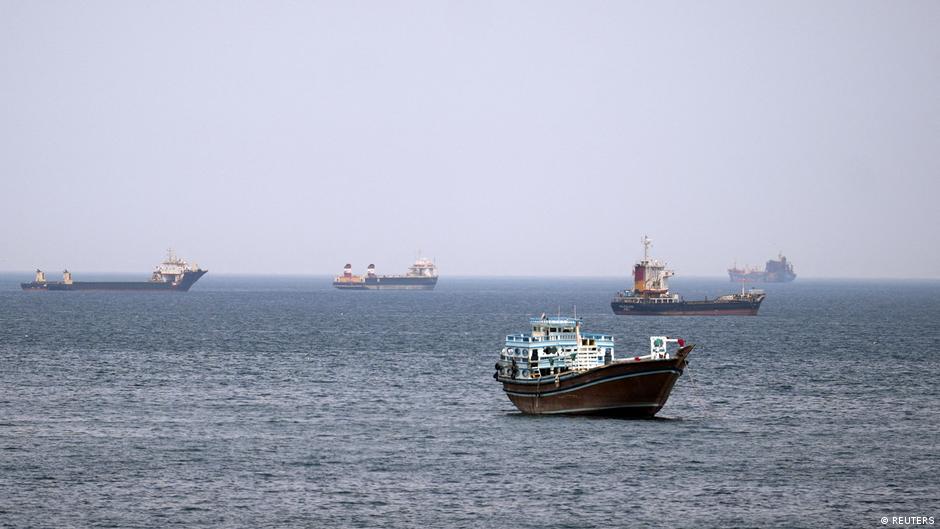
Skip next section Trump orders US Navy to 'shoot and kill' Iranian boats placing mines in HormuzApril 23, 2026Trump orders US Navy to 'shoot and kill' Iranian boats placing mines in HormuzUS President Donald Trump, in a morning social media post, ordered the US Navy to "shoot and kill" any boat putting mines in the Strait of Hormuz. Trump also said the military is intensifying its mine-clearing efforts in the critical waterway, where vessel traffic has all but halted since the war began in late February. "I have ordered the United States Navy to shoot and kill any boat, small boats though they may be...that is putting mines in the waters of the Strait of Hormuz," Trump posted. "There is to be no hesitation. Additionally, our mine "sweepers" are clearing the Strait right now. I am hereby ordering that activity to continue, but at a tripled up level!" The message comes after Iranian leaders said there could be no further peace talks with the US as long as the US blockade of Iranian ships passing through the strait continues. Trump extends US-Iran ceasefire as talks remain on holdTo view this video please enable JavaScript, and consider upgrading to a web browser that supports HTML5 video https://p.dw.com/p/5CiZCSkip next section US military says it seized another vessel in the Indian OceanApril 23, 2026US military says it seized another vessel in the Indian OceanThe US military seized another tanker accused of smuggling Iranian oil in the Indian Ocean during the US blockade of Iranian ports. The incident comes a day after Iran's Revolutionary Guards said they had seized two ships near the Strait of Hormuz. That in turn was a response to US forces boarding an Iranian ship in the Bay of Bengal — between India and Southeast Asia. The US Defense Department on Thursday announced on X that it boarded a "sanctioned stateless vessel," carrying oil from Iran, in the Indian Ocean overnight. "We will continue global maritime enforcement to disrupt illicit networks and interdict vessels providing material support to Iran, wherever they operate," the post read. Ship-tracking data showed the oil tanker, Majestic X, in the Indian Ocean between Sri Lanka and Indonesia, roughly the same location as the oil tanker Tifani, earlier seized by American forces. The vessel was reportedly en route to Zoushan, China. https://p.dw.com/p/5CiMsSkip next section Deposed Shah's son calls for regime change in Iran on Berlin visitApril 23, 2026Deposed Shah's son calls for regime change in Iran on Berlin visitReza Pahlavi delivered a speech in Berlin ahead of talks with German politicians Image: Sebastian Gollnow/dpa/picture allianceReza Pahlavi, the former Shah's son, is in Germany to drum up support for his global campaign to overthrow Iran's leadership. During a speech in the capital, he called the German government's refusal to meet with him "a disgrace." Read DW's full report on what Reza Pahlavi said in his visit to Berlin. https://p.dw.com/p/5CiK1Skip next section Iran war threatens to push millions back into poverty, UN development chief saysApril 23, 2026Iran war threatens to push millions back into poverty, UN development chief saysMore than 30 million people will be pushed back into poverty by the impacts of the Iran war, including disruptions to fuel and fertilizers just as farmers in the Northern Hemisphere head into crucial months for planting crops, UN development chief Alexander De Croo told Reuters news agency. Fertilizers have either risen in price or are shorter in supply as the Strait of Hormuz remains effectively closed to shipping. Much of the world's fertilizer is produced in the Middle East and the Strait of Hormuz is critical for fertilizers to be shipped to the rest of the world. The shortages have already lowered agricultural productivity and would likely hit crop yields later this year, the former Belgian prime minister said. "Food insecurity will be at its peak level in a few months — and there is not much that you can do about it," he said, also listing other fallouts of the crisis, including energy shortages and falling remittances. "Even if the war would stop tomorrow, those effects, you already have them, and they will be pushing back more than 30 million people into poverty," he said. Earlier this month, the World Bank, the International Monetary Fund and the UN World Food Program warned that the war would drive up food prices, further burdening the world's most vulnerable populations. Iran war triggers fertilizer crisis for India's farmersTo view this video please enable JavaScript, and consider upgrading to a web browser that supports HTML5 video https://p.dw.com/p/5ChxsSkip next section Tehran receives first revenue from Strait of Hormuz tolling system, Iranian official saysApril 23, 2026Tehran receives first revenue from Strait of Hormuz tolling system, Iranian official saysTankers anchored in the Strait of Hormuz off the coast of Qeshm Island, Iran, on April 18Image: Asghar Besharati/AP Photo/picture allianceIran's deputy parliament speaker, Hamidreza Hajibabaei, announced that his country's central bank has received its first revenue from tolls imposed on shipping through the Strait of Hormuz, according to a report carried by the semiofficial Tasnim news agency. "The first revenue received from the Strait of Hormuz tolls was deposited into the Central Bank account," the report said. The vital passageway has essentially remained closed to commercial shipping since the Iran war began at the end of February. Iranian grip over the waterway prompted the Trump administration to impose a new US blockade in the Strait beginning April 13 that also remains in place. The shutdown of the vital shipping route, which accounts for a fifth of global supply of oil and liquefied natural gas, has sent global prices of oil, gas and fuel soaring. Can Iran impose tolls? Experts have criticized the Iranian payment system because charging vessels to pass safely through the strait contravenes international law. Freedom of navigation "is the foundation of international maritime trade … the ability to go through these areas without any form of obstruction," Robert Huebert, an international relations expert at the University of Calgary in Canada, said. "If you were to do that [charge a fee], you would have direct opposition from almost every state." Tehran first announced the tolls after the beginning of a US-Israeli bombing campaign and war against Iran. https://p.dw.com/p/5Ch6ESkip next section Pentagon assessment says could take up to six months to clear Hormuz mines: report April 23, 2026Pentagon assessment says could take up to six months to clear Hormuz mines: report It could take up to six months to fully clear the Strait of Hormuz of Iranian-laid mines once hostilities end, the Washington Post reported on Wednesday, citing a Pentagon assessment shared with US lawmakers. The strait, a key shipping lane transmitting about one-fifth of the globe's oil and much of its natural gas, has been largely closed since the start of the US-Israeli war on Iran, sending energy prices sharply higher. According to the Post report, lawmakers were told in a classified briefing that Iran may have deployed at least 20 mines in and around the waterway, including some remotely floated using GPS technology, making them harder to detect. The Pentagon assessment said mine-clearing operations were unlikely to begin before the war ends. However, Pentagon spokesperson Sean Parnell told the newspaper that its information was "inaccurate." Iran's Revolutionary Guard has declared a 1,400-square-kilometer "danger zone" where mines may be present. Last week, a spokesperson for German shipping giant Hapag-Lloyd said companies needed clarity on safe routes, as concerns over mines continued to weigh. How Iran's Navy wields power in the Strait of HormuzTo view this video please enable JavaScript, and consider upgrading to a web browser that supports HTML5 video https://p.dw.com/p/5CglcSkip next section IN DEPTH: School's out in Iran: No phone, no internet, no classesApril 23, 2026IN DEPTH: School's out in Iran: No phone, no internet, no classesMany school buildings have been destroyed in airstrikesImage: Shadati/Xinhua/IMAGOIran's schools are closed because of the war. Classes are being held via TV programs and the national intranet. Children without a laptop or smartphone are left out. The country is effectively cut off from the internet. Read more on how the Iran war is affecting schoolchildren in this report by DW's Shabnam von Hein. https://p.dw.com/p/5Cg73Skip next section Lebanon, Israel to discuss ceasefire extension in WashingtonApril 23, 2026Lebanon, Israel to discuss ceasefire extension in WashingtonIsraeli and Lebanese officials are expected to hold a second round of direct talks in Washington on Thursday. Representatives are reportedly considering the extension of the 10-ceasefire that took effect last Friday. Beirut has signaled that it would request a one-month extension before the truce expires in the coming days. Lebanese officials also planned to raise concerns over widespread demolitions carried out by the Israeli military in the south during the negotiations. The talks come a day after Israeli air strikes on Lebanon killed at least five people, including Lebanese journalist Amal Khalil. Lebanese authorities say Israeli attacks have killed at least 2,454 people since the war began. Israeli Foreign Minister Gideon Saar said on Wednesday that Israel had no "serious disagreements" with Lebanon, calling the Hezbollah militant group "the obstacle to peace and normalization." A Hezbollah lawmaker told the AFP news agency the group could accept indirect talks with Israel mediated by the United States. Israel‑Hezbollah ceasefire holds despite sporadic clashesTo view this video please enable JavaScript, and consider upgrading to a web browser that supports HTML5 video https://p.dw.com/p/5CgPbSkip next section Iran executes man with alleged ties to MEK, Israeli intelligence April 23, 2026Iran executes man with alleged ties to MEK, Israeli intelligence Iran executed a man convicted of ties to the exiled opposition group Mujahideen-e-Khalq (MEK) and Israel's intelligence service, the judiciary's Mizan news outlet said on Thursday. Soltanali Shirzadi Fakhr, according to Mizan, was a long-time MEK member and found guilty of cooperating with Israeli intelligence. The report said the Supreme Court upheld the death sentence, which was carried out after legal procedures were completed. On Wednesday, Iranian authorities had executed a man, Mehdi Farid by hanging after convicting him of ties to the Israeli intelligence agency, Mossad. https://p.dw.com/p/5CgIWSkip next section Oil jumps as Iran keeps Hormuz shut despite truce extensionApril 23, 2026Oil jumps as Iran keeps Hormuz shut despite truce extensionOil prices surged on Thursday despite US President Donald Trump's extension of the Iran war ceasefire. Tehran has said it will not reopen the Strait of Hormuz to allow shipping traffic as long as a US naval blockade remains in place. Crude prices jumped as much as 4% in early Asian trading, with the international oil benchmark Brent crude jumping 3.5% overnight to cross $100. Brent crude futures rose 0.6% to $102.47 a barrel. Oil prices have climbed significantly since the United States and Israel attacked Iran on February 28. Brent crude was trading around $70 before the start of the conflict. Countries around the world are experiencing an energy security shock amid ongoing uncertainty surrounding the war. Trump extends US-Iran ceasefire as talks remain on holdTo view this video please enable JavaScript, and consider upgrading to a web browser that supports HTML5 video https://p.dw.com/p/5Cg6uSkip next section Hormuz standoff casts shadow over Iran ceasefire talksApril 23, 2026Hormuz standoff casts shadow over Iran ceasefire talksShips have been effectively barred from sailing through Hormuz for weeksImage: REUTERSThe fragile peace in the Middle East teetered uncertainly on Wednesday as Iran fired on three and seized two international vessels in the Strait of Hormuz, casting a shadow over prospects for renewed peace talks. US President Donald Trump said on Tuesday he was extending the truce to allow more time for negotiations mediated by Pakistan. On Wednesday, the White House said Trump had not set a new deadline for the truce to expire. But Iranian officials did not publicly endorse the move and said no decision had been taken on attending a new round of talks. Iran's parliament speaker, Mohammad Bagher Qalibaf, said a full ceasefire could only hold if Washington lifts its blockade of Iranian ports. Iran considers the blockade an act of war. "Reopening the Strait of Hormuz is impossible with such flagrant breach of the ceasefire," Qalibaf wrote on X. Iran has not decided whether to join new talks, Foreign Ministry spokesperson Esmail Baghaei told state media. Tehran accused the United States of acting in bad faith. Earlier, Mojtaba Ferdousi Pour, the head of the Iranian mission in Egypt, told the AP news agency that no delegation would go to Pakistan until Washington lifts its blockade. No traffic through Hormuz The impasse has effectively shut the crucial Strait of Hormuz, straining economies across the world. "We should know where we stand. Is it going to be a ceasefire, peace, or the war is going to continue?" 59-year-old Tehran resident Mashallah Mohammad Sadegh told AP. "The way things currently are, one doesn't know what to do." https://p.dw.com/p/5Cg8sSkip next section Welcome to our coverageApril 23, 2026Welcome to our coverageWelcome to our rolling coverage of the US-Israeli war with Iran and the situation across the Middle East. Here are the major developments from Wednesday: Iran's Revolutionary Guard seized 2 vessels in the Strait of Hormuz Donald Trump's ceasefire extension was met with skepticism in Tehran Iran said the ceasefire only makes sense if the US blockade is lifted Reza Pahlavi, son of the last Shah of Iran, arrived in Berlin for talks The war and blockades are fueling a crisis for the world's aviation sector In Lebanon, a Lebanese journalist was killed in an Israeli strike Lebanon reported more than 62,000 damaged or destroyed housing units, some after the ceasefire Stay tuned for all the latest developments from the US-Israeli war with Iran on Thursday. https://p.dw.com/p/5Cg6RShow more posts
BreakingWars & Conflicts
Iran war: Trump orders 'shoot and kill' on mine-laying boats in Strait of Hormuz
Deutsche Welle April 23, 2026 at 01:18 PM
Original source
Deutsche Welle